Monday, June 6, 2016

Is all dental floss created equal?

If you’re uncertain about which type of floss is best for you or a member of your family, ask your dentist or dental hygienist for advice. Here are some points that might be helpful:
Large gaps between your teeth? Try woven floss or Super Floss. We like Listerine Gentle gum care woven floss.https://www.listerine.com/toothpaste…/listerine-gentle-floss
Not much space between your teeth? You may find that a waxed floss, dental tape, or a thinner string floss such as POH is easier to slide into those tight spaces. POH even comes in black floss if you are excited to see how much plaque you are removing!http://www.buypoh.com/percept630blackfloss.html
We also like shred resistant Listerine Ultraclean floss (formerly Reach brand) since it gets into these tighter spaces but still has microgroove and a toothpaste coating to help remove stubborn plaque!https://www.listerine.com/toothp…/listerine-ultraclean-floss
Braces, bridges or implants? A spongy floss is a good option, but any floss can be used if you wear dental appliances, especially if you have a floss threader. We like Proxysoft (formerly Thornton's) Bridge and Implant Threaders for our bridge, implant and even in problem gum areas where extra TLC is needed.
http://www.proxysoft.com/products.html
When it comes to dental floss, flossing every day is the most important choice you can make!
If you have any questions about which type of floss may be most effective for you, contact our dental hygiene department at healthysmiles@brittenperio.com or call 7275862681. ‪#‎brittenperio‬‪#‎clearwaterperiodontist‬


Wednesday, May 11, 2016

Periodontal Disease: The Big Picture


Research has shown that periodontal disease is associated with several other diseases. Recent research demonstrates that inflammation may be responsible for the association between gum disease and heart disease, stroke, diabetes and at least several other inflammatory conditions.
Diabetes - Individuals with diabetes are more likely to have periodontal disease than people without diabetes, because they are more at risk of getting infections. Inflammation that starts in the mouth may weaken the body’s ability to control blood sugar.
Cardiovascular disease or stroke. Periodontal disease and heart disease are often present together. Up to 91% of patients with heart disease have periodontitis, compared to 66% of people with no heart disease. The two conditions have several risk factors in common, such as smoking, unhealthy diet, and excess weight. And some suspect that periodontitis has a direct role in raising the risk for heart disease as well.
Dr. Britten and his staff keep a current and thorough medical history for each patient at each visit. As health-care professionals, it is their goal to continue to educate our patients the importance of good oral health and its impact on their overall health.
If you have any questions as the the effect that periodontal disease has on your overall health, call us for an evaluation at 727-586-2681 or visit our website at www.brittenperio.com for more information.

Monday, May 9, 2016

Periodontal Disease Can Be Controlled and Treated

Periodontal Disease Can Be Controlled and Treated

Your dentist and/or dental hygienist routinely perform an examination of your gum tissue health which includes periodontal probing, or measuring of the depth of your gums.
Unhealthy gums pull away from the teeth and form "pockets" that are infected. The body's immune system fights bacteria as the plaque spreads and grows below the gum line. Bacterial toxins and the body's own enzymes fighting the infection start to break down the bone and connective tissue that hold teeth in place. If not treated, the bones, gums, and connective tissue that support the teeth are destroyed. The teeth may eventually become loose and have to be removed.
Periodontal disease – and the harmful affects to the gums and supporting structures of the teeth – can be controlled and treated. Improvement to our patients’ overall health is also often dramatically improved.
The health improvement is easy to appreciate when you consider living with an active bacterial infection, easily exposed to one’s bloodstream, can have a detrimental affect beyond the harm to the tooth and gums.
If you have symptoms of gum disease, contact us immediately. Gum disease addressed early can be reversed – and gum disease addressed later can be controlled. For more information, please contact our office at 727-586-2681 or www.brittenperio.com.


Monday, May 2, 2016

What is periodontal disease?


Q: What is periodontal disease?
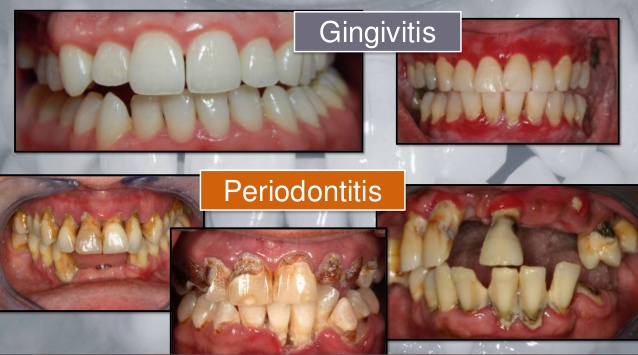
A: Periodontal disease, also known as gum disease, often begins as a buildup of plaque on the tooth's surface near the gum line. If this plaque is not removed by brushing and flossing regularly, it can harden into what your dentist calls tartar. Plaque will continue to build up over the tartar, eventually causing the gums to become red, swollen, and irritated. This is known as gingivitis and is the first stage of periodontal disease. If leftuntreated, gingivitis can turn into periodontal disease.
What are the symptoms of periodontal disease?
-Red, swollen, sore gums
-Gums that bleed when brushing and flossing
-Teeth that appear longer or become loose
-Large spaces that form between the teeth
-Gums that begin to pull away from the teeth
-Chronic bad breath
Periodontal disease, if left untreated, can contribute to other health problems including heart disease and diabetes. If you're pregnant, having periodontal disease is also linked to premature birth or low birth weight. Your smile's health affects the overall health of your body.
As a periodontist, Dr Britten enjoys making a positive impact in our patients’ lives by improving their smiles as well as their comfort and health. We believe in delivering state of the art care with a gentle touch in a lighthearted environment. If you have any questions about your periodontal (gum) health, please contact our office at 727-586-2681 or visit our website at www.brittenperio.com.

Monday, March 21, 2016

How Nutritional Health Contributes to Healthy Teeth

How Nutritional Health Contributes to Healthy Teeth

A balanced, nutritious diet is essential to our health. But did you know that eating patterns and food choices play an important role in your dental health? Eating healthy can prevent tooth decay and gum disease. 

Our teeth are an important part of the first steps in the digestion process - chewing and swallowing. The mouth is the first place t
he nutrients consumed everyday will go. If your nutrition is poor, the first signs often show up in your mouth.

Empty calorie foods such as candy (especially hard or sticky candies), cookies, cakes, and other sugary snacks are not only harmful because they do not offer nutritional value, but because the amount and type of sugar that they contain that can adhere to teeth. The bacteria in your mouth feed off these sugars, releasing acids, and that’s what leads to tooth decay.

Sugar-containing drinks—soda, lemonade, juice and sweetened coffee or tea (iced or hot)—are particularly harmful because sipping them causes a constant sugar bath over teeth, which promotes tooth decay.

Calcium and phosphorous are nutrients that play a critical role in dental health, by protecting and rebuilding tooth enamel. Foods that benefit tooth health, include cheese, milk, plain yogurt, calcium-fortified tofu, leafy greens and almonds because they provide high amounts of calcium and other nutrients. Protein-rich foods like meat, poultry, fish, milk and eggs are the best sources of phosphorus.

Fruits and vegetables are good choices for a healthy smile since they are high in water and fiber, which  balance the sugars they contain and help to clean the teeth and stimulate salive productuon. Many also contain vitamin C (important for healthy gums and quick healing of wounds) and vitamin A (another key nutrient in building tooth enamel).

For more information on how nutrition affects oral health contact us at healthysmiles@brittenperio
.com

Wednesday, February 24, 2016

Smart toothbrushes: 4 exciting new products

In a recent article, “Are you smarter than your smart toothbrush?” Dr. Pamela Maragliano–Muniz, DMD, reviewed four smart toothbrushes the Beam Brush, and the Philips Sonicare for Kids.

1   1. The Oral-B Pro 5000 / 7000 SmartSeries.   This toothbrush is Bluetooth-connected with an interactive app.  Your dental hygienist can enter important professional guidance to help you use this feature  at home.


Oral-B Pro 5000 SmartSeries electric toothbrush, Oral-B Pro 7000 SmartSeries electric toothbrush, smart toothbrush, smart toothbrushes, toothbrush with Bluetooth     
2     2.  The Kolibree powerbrush, is made in France and is new in the U.S.  It has 3-D motion sensors as well as Bluetooth connectivity. Its app features interactive games for kids and coaching for adults.
  

3    3.  The Beam Brush connects to a smartphone and automatically tracks and rewards good brushing habits.  The maker of the brush offers a subscription service through which floss, toothpaste, and replacement brush heads can be delivered every three months.


4.        Phillips Sonicare for kids

Philips Sonicare has developed a kid-friendly smart toothbrush to encourage better kids to brush more effectively.  The toothbrush can be customized with eight stickers and features an interactive app. The child (or parent) can create a profile on the app and the app will reward the child for proper brushing habits and parents can monitor the child’s brushing habit. In addition, the child can adopt a character, name it.  When they brush correctly and for the appropriate time, their character will smile and be happy!


Wednesday, February 17, 2016

Six Reasons to Brush Before Bed Time!

Six Reasons to Brush Before Bed Time!
1. Brushing removes the plaque that has accumulated all day long so that bacteria have lesser ground to play on at night and hence the teeth are less damaged and decay.
2. The primary cause of gum disease is plaque accumulation at the gumline. Brushing before sleep will remove this plaque, avoiding the potential for swollen and bleeding gums.
3. Brushing twice a day reduces bad breath considerably. Try brushing tonight if you haven’t been. The next morning you will notice an improvement in any bad breath you have been experiencing.
4. The fluoride in toothpaste helps form a protective layer on your teeth to prevent them from the process of destruction. So, a 12 hour protection is always better than 24 hour.
5. Preventing dental problems decreases the extent of dental work you will need. Brush twice a day and save money.
6. Set an example for your kids! You cannot teach your kids what you do not follow. If you do not brush yourselves your child will never ever brush at night.
Oh, and don't forget about your interdental (in between the teeth) care!

If you have any questions about optimal oral hygiene, call us 727-586-2681 or email at healthysmiles@brittenperio.com

Monday, November 16, 2015

Gum Disease is a Lifelong Condition


Gum disease is a chronic lifelong condition which can often be halted in its earliest, often reversible stage, gingivitis. "Untreated gingivitis can advance to periodontitis (gum disease). With time, plaque can spread and grow below the gum line. Toxins produced by the bacteria in plaque irritate the gums. The toxins stimulate a chronic inflammatory response in which the body in essence turns on itself, and the tissues and bone that support the teeth are broken down and destroyed. Gums separate from the teeth, forming pockets (spaces between the teeth and gums) that become infected. As the disease progresses, the pockets deepen and more gum tissue and bone are destroyed. Often, this destructive process has very mild symptoms. Eventually, teeth can become loose and may have to be removed." -from Perio.org.

Once you have been diagnosed with gum disease, it can be treated with surgical and non-surgical therapy and in most cases easily maintained for life with routine periodontal maintenance (dental hygiene visits and close monitoring) and a recommended home care schedule. Gum disease is a lifelong battle, however, we are committed to working with you and your dentist to keep your smile healthy for life. Please contact our office at healthysmiles@brittenperio.com or visit our website at www.brittenperio.com for more information.

Wednesday, November 11, 2015

Over 60 million Americans grind their teeth at night


Do you ever wake up with an aching jaw, tooth sensitivity or notice that your teeth seem to be shifting or loosening? Clenching or grinding your teeth can put excessive force on the supporting tissues of the teeth and could speed up the rate at which periodontal tissues are destroyed. Teeth grinding or clenching can also cause abnormal wear and tear on the teeth which will prematurely age and loosen them, causing problems such as hypersensitivity (from the small cracks that form, exposing your dentin). Clenching or grinding, known as bruxism, can also lead to chronic jaw and facial pain, as well as headaches.

If no one has told you that you grind your teeth, here are a few clues that you may suffer from bruxism:

Your jaw is sore often, or you hear popping sounds when you open and close your mouth.
Your teeth look short or worn down.
You notice dents in your tongue, especially along the edges.

A common therapy involves use of a special appliance worn while sleeping which your dentist can custom fit for you.

Dr. Britten can evaluate you for evidence of clenching or grinding and make the appropriate recommendation to avoid further damage to your teeth, gums and TMJ.


For any questions about bruxism, please contact our office at 727-586-2681 and www.brittenperio.com.

Monday, October 26, 2015

Most Common Cause of Gum Disease


Unless you're aware of the signs and symptoms of gum disease and how it's caused, it's possible that you may have unknowingly developed it. Often painless, gum disease -- or periodontal disease -- becomes progressively more serious when left untreated. As you learn more about the common causes of gum disease, you'll be better-equipped to maintain the best oral health possible.
Gingivitis & Periodontitis: Common Causes of Gum Disease
  • Bacteria & Plaque. Bacteria in the mouth creates a sticky film over the teeth. Good hygiene practices help remove the bacteria and the plaque they cause. When plaque is not removed, it develops into a rock-like substance called tartar. This can only be removed by a dental professional.
  • Smoking & Tobacco. If you're a smoker or use tobacco, you face a higher risk of developing gum disease. Additionally, tobacco use can lead to stained teeth, bad breath, and an increased risk of oral cancers.
  • Certain Medications. Some medications that are taken for other health conditions can increase a person's risk of developing gum disease. If you take steroids, anti-epilepsy drugs, certain cancer therapy medications, or oral contraceptives, speak to Dr. Todd Britten about how to maintain healthy gums.
  • Medical Conditions. Certain medical conditions can impact the health of your gums. For instance, diabetics face an increased risk of gum disease due to the inflammatory chemicals present in their bodies. Always talk to our team about other health conditions to ensure we take that into account when treating you.
Take a Proactive Stance
Good oral hygiene practices and regular visits to our Clearwater, FL office can help you eliminate or reduce the risks of developing gum disease. A thorough cleaning with your toothbrush and dental floss should take about three to five minutes. Brush your teeth a minimum of twice per day and floss at least once each day. Keep these tips in mind and you’ll be ready to prevent gum disease.

www.brittenperio.com

What if you flossed as often as you watched Netflix?


We encourage our patients to find ways to incorporate taking care of your teeth into your day, however you can! Even while watching Netflix, if that is what works for you!
"Interdental cleansing (cleaning between the teeth) is necessary for ... optimal oral health. Since most toothbrushes have limited access to proximal (in between) surfaces of teeth... interdental cleansing must be included in dental hygiene care plans. Interdental spaces are areas where bacteria can accumulate, multiply and remain undisturbed.
Undisturbed plaque biofilm can cause gingival inflammation and bleeding and increase the risk for and progression of periodontal disease." Source: "Interdental Cleansing" by Jacquelyn L. Fried, RDH, MS
Actually, cleaning between your teeth with floss, proxabrushes, softpicks, rubber tip stimulators and watching Netflix at the same time is just fine with us. Dr. Britten and his hygiene team encourage patients to find ways to incorporate taking care of your teeth into your day, however you can! 

For more oral hygiene tips or tricks, feel free to email us at healthysmiles@brittenperio.com or visit our website www.brittenperio.com.

Monday, October 12, 2015

Seven Foods that will Give You a Smashing Smile

Seven Foods that will Give You a Smashing Smile

As the saying goes, you are what you eat. But did you know that what you eat also affects your smile? Chow down on these seven tasty treats, recommended by Dr. Todd Britten and our staff, for a healthier mouth and a smashing smile!
Sesame Seeds
These tiny seeds that you find in some Chinese and Thai dishes (as well as on top of your hamburger bun) are packed with bone-building calcium. They help to preserve and protect the bone that supports your teeth and gums. As a bonus, they also help to build up your tooth enamel while sloughing away plaque.
Kiwi
This funny little fruit has the highest amount of Vitamin C of any fruit, including oranges! What does this mean for your chompers? Well, you need Vitamin C to keep your gum tissue healthy and strong. Without it, they are more susceptible to periodontal disease.
Sweet Potatoes
These are not just for Thanksgiving and Christmas dinner! You should add sweet potatoes to your regular diet. These tasty spuds are rich in Vitamin A, which your body uses to form tooth enamel and heal gum tissue.
Onions 
You know those strong vapors from onions that make you cry? Well, they come from the sulfur compounds in the vegetable, which gives them a superpower-packed antibacterial punch. Get ready, though: Onions are most effective for your smile when you eat them raw!
Cheese
If you love cheese, you will love this news! Munching on some cheese helps prevent gum disease and cavities. The reason is that cheese is very high in calcium and phosphate, which help to balance the pH levels in your mouth. This in turn helps to preserve your tooth enamel and kill harmful bacteria.
Green Tea
Sipping on some green tea can not only help prevent cavities and gum disease, it can also kill the bacteria that cause bad breath. Score! Green tea has catechins, which actually kill the bacteria that cause plaque. So drink up! Your smile depends on it!
Celery
Have some fun with that crunchy stuff because, guess what? It is great for your smile! When you chew celery you produce saliva. Your saliva neutralizes cavity-causing bacteria. As a little added bonus, while you are chewing, it is giving your gums a little massage and cleaning between your teeth.
So grab some of these healthy snacks and give your mouth something to smile about!


Please call us with any questions about your smile.
727-586-2681
www.clearwaterperiodontist.com
www.brittenperio.com

Monday, September 21, 2015

Clearwater, FL Periodontist, Dr. Todd Britten, Now Provides Bone Loss Patients With The Strength For Dental Implants Through Bone Grafting Procedures

Todd Britten, DMD, M.S. , a board-certified periodontist,  places bone grafts for patients suffering from bone loss in the jawbone, which occurs when teeth are missing and are no longer stimulating the bone. Dental implants are often used to replace teeth and can stimulate the jawbone, but when there is not enough jaw bone to hold the implants, the dental procedure of bone grafting may be done first to provide security for the implants.


Dr. Todd Britten recommends bone grafting procedures for patients with missing teeth who need additional jaw bone support for the placement of dental implants. Bone grafting is recommended when bone loss is extreme. 
The bone grafting procedure takes bone from non-essential areas of the patient's body and transplants it into the area of the jaw where the dental implants will be located. In most cases, allografts are used.  Allografts are taken from a bone bank where human bone from cadavers has been donated and xenografts are taken from animal bone. Autogenous grafts come from the patient.  The new bone is surgically placed in the jaw area where it is required and may be supplemented by the patient's bone marrow mixed with a grafting material. The incision is closed using sutures, and the area is allowed to heal.  Local anesthesia is all that is needed in most cases, however, Dr. Britten offers different forms of sedation dentistry, including IV conscious sedation.  
The dental bone graft then heals completely prior to proceeding with other procedures, such as the placement of dental implants. This will generally take about four to six months. Once the area completely heals, the patient can be evaluated for the placement of dental implants.  This often can be done with an examination and radiograph and sometimes a ConeBeam CT scan can be performed.  The implants are made of titanium (the same material used in many replacement hips and knees), a metal that is well suited to pairing with human bone.  Patients interested in these procedures should locate additional information at http://www.clearwater-periodontist.com or www.brittenperio.com.  


Britten Periodontics & Implant Dentistry is a periodontal practice offering patients personalized dental care in implant dentistry in Clearwater, Florida. Dr. Todd Britten received his Bachelor of Science & Doctorate of Dental Surgery from University of Florida, a Master’s Degree and Certificate in Periodontology and Implant Dentistry; and completed extensive training at the Institute of Advanced Laser Dentistry. He is one of the only board-certified periodontists in Pinellas County. He is a member of the American Academy of Periodontology, American Dental Association, Florida Association of Periodontists, Upper Pinellas County Dental Association, Hillsborough County Dental Association, Hillsborough County Dental Research Association and Florida West Coast Dental Association.  


The history of dental implants

The earliest endeavors for dental implant tooth substitutes on record dates back to the Mayan civilization, to 600 AD. Archeologists recovered primeval skulls in which the teeth had been replaced with materials the ranged from wood, stones, and jewels to small pieces of seashells.
Like most scientific progresses, the finding of what makes todays dental implants so successful was unexpected. In 1952, a Swedish orthopedic surgeon, named Dr. Branemark, placed a very small titanium cylinder into a bone to learn how the bone would heal. What he discovered was that the titanium cylinder had fused (melded to the bone.) Out of this experiment dental implants would be born within two decades.
In 1970s, modern dental implants made their first appearance. Of course, over the past four decades, the original dental implant has undergone several improvements in both structure and design, but has always been based on the original theme.
Dental implants were first made available to individuals who had lost all of their teeth and had difficulty wearing dentures, mainly because they had lost of much of their jawbone were dentures set. Today, most dental implants are used in place of dentures, for multiple teeth that are missing, or to replace a single tooth.
When dental implants were first designed, they were a one size fits all. The original dental implants were all the same circumference, while the length of each tooth varied depending on the type of tooth it was replacing. The dental implants were smoothed out and polished by a machine, but still did not produce the natural looking dental implants we have today.
Now, with the help of state-of-the-art equipment and advanced technology, implants come in a wide variety of sizes and shape to match the teeth that are missing. The surfaces of today’s dental implants give them a more natural look and feel. In addition, the surface of the dental implant also attaches to the bone much easier and for a longer period of time.

Dr. Branemark's discovery has left an impression on dental professionals, all over the world, including Dr. Todd Britten. If you are considering dental implants to improve your smile’s health, beauty, and function, be sure to contact our Clearwater, FL office to schedule an appointment.

www.brittenperio.com

Does smoking affect oral health?


By now, everyone knows that smoking is bad for you. But the truth is its broad-reaching health effects are not all known by everyone. This is especially true of oral health. Smoking can have serious repercussions in this regard. To give you a better idea of how smoking can affect your oral health, Dr. Todd Britten and our team have listed some issues that can arise.

Oral Cancer
Oral cancer can have steep ramifications for anyone that gets it. Surgery can be required to eliminate the cancer before it spreads to more vital parts of your body. Any type of cancer is about the worst health effect you can get, and this especially holds true to the affects that smoking has on your mouth. The type of mouth surgery required with oral cancer can leave your face deconstructed in certain areas, and it is all due to smoking or use of other tobacco products.
Tooth Discoloration and Bad Breath
At the very least, it is fair to say that as a smoker you will often have bad breath, and while you may try to cover it up with gum or mints, tooth discoloration is a whole other story. The chemicals and substances in cigarettes stick to your teeth staining them brown and yellow colors that are increasingly difficult to disguise.
Gum Disease and Loss of Bone
Another effect of smoking is the increased risk of gum disease. Your gums may start to recede, which can eventually lead to the loss of teeth. Smoking can also increase bone loss and density in your jaw which is vital to the health of your mouth. Gum disease and bone loss are two signs that smoking is definitely bad for your mouth.
When it comes to the health of your mouth, the question is not whether smoking affects your health, it's how does it affect your health and to what degree. If for no other reason than because smoking involves your mouth as its entry point, it is safe to say that it can have long-lasting and detrimental consequences on your oral health.

To learn more about smoking and your oral health, contact our Clearwater, FL office to schedule an appointment with Dr. Todd Britten.

Signs and Symptoms of Gum Disease

Gum disease is a common problem among adults, and one Dr. Todd Britten and our periodontal team see all too often. Early stages of gum disease are known as gingivitis, or inflammation of the gums. This can progress to more serious gum disease known as periodontitis.
If you notice signs and symptoms of gum disease, take early action to prevent progression of gingivitis to more serious periodontitis and the risk of losing your teeth due to gum loss.
Watch for These Signs and Symptoms
It’s important to watch for signs and symptoms of gum disease, especially if you have risk factors. Early detection at home can help you get treatment sooner so that you don’t risk losing your teeth. These are the classic signs and symptoms of gum disease:
  • Inflamed gums, or gums that are red or swollen
  • Pain when you chew
  • Teeth that are sensitive to heat, cold, sweets, or brushing
  • Loose teeth
  • Bad breath that you can’t get rid of by brushing or using mouthwash, even when you don’t eat particularly smelly food
  • Gums that are sore to the touch or bleed easily, including when you brush your teeth
  • Teeth that seem to be taller or longer due to receding gums
  • A change in the way your teeth fit together when you bite
  • A change in the way your dentures fit in your mouth
Signs We Look For
When you visit our Clearwater, FL office, we will examine you to see how far your gum disease has progressed. We do this by:
  • Discussing your medical history with you to see which risk factors you have
  • Checking your gums to see if they are swollen or red, and how far the inflammation has progressed
  • Measuring the depth of any pockets around your teeth using a type of ruler called a probe.
Treatment for Gum Disease
Brushing and flossing go a long way toward preventing bacteria from forming acid on your teeth and allowing tartar to build up. However, once you have the beginnings of gum disease, your regular brushing and flossing routine aren’t enough. Dr. Todd Britten can provide more extensive treatment, such as:
  • Deep cleaning through scaling and root planing
  • Medications to fight the infection
  • Surgical treatments, like bone or tissue grafting to replace lost tissue

If you think you may have gum disease, or are concerned about the state of your gum health, be sure to contact our Clearwater, FL office to schedule an appointment. Together, we can help you achieve a lifetime of good oral health.